
Anthony R. McGinnis Jr.
RESEARCHER
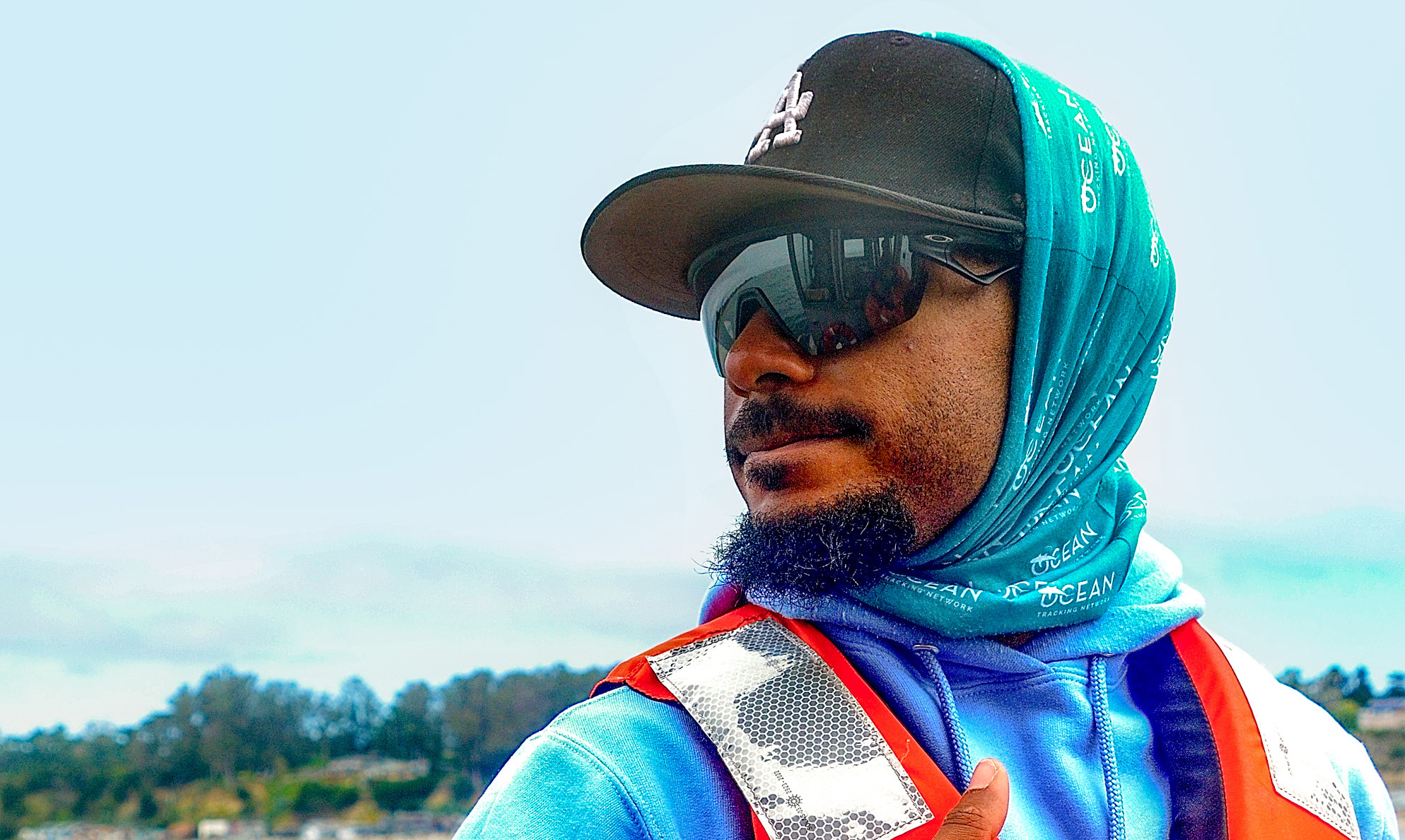
Anthony R. McGinnis Jr., Master’s student
Country
United States
Institution
California State University Monterey Bay
Ocean
Pacific Ocean
Anthony R. McGinnis Jr. is a graduate student at Moss Landing Marine Laboratories. In this interview, we explore how temperature changes and ocean warming are influencing juvenile white shark (JWS) residency and habitat use at Seacliff State Beach in Monterey Bay, California.
Which question(s) are you trying to answer with your current research?
My project investigates whether localized warm-water refuges within Monterey Bay, particularly near Seacliff State Beach, function as emerging nursery habitats for JWS. I aim to better understand how a changing ocean climate may be driving JWS range expansion and reshaping marine predator distributions along the U.S. West Coast.
Why is this research important?
JWS rely on warm, productive nearshore habitats during early life stages, as these environments promote growth, improve metabolic efficiency, and may reduce predation risk. Historically, Southern California has been considered the primary nursery region for JWS along the U.S. West Coast, but recent warming trends and marine heatwaves have coincided with an increase in juvenile shark presence farther north in Monterey Bay. Understanding if Monterey Bay is developing into a suitable nursery habitat is essential for predicting how climate change may alter ecosystems, species distributions, and human-shark interactions.
Describe your research methods.
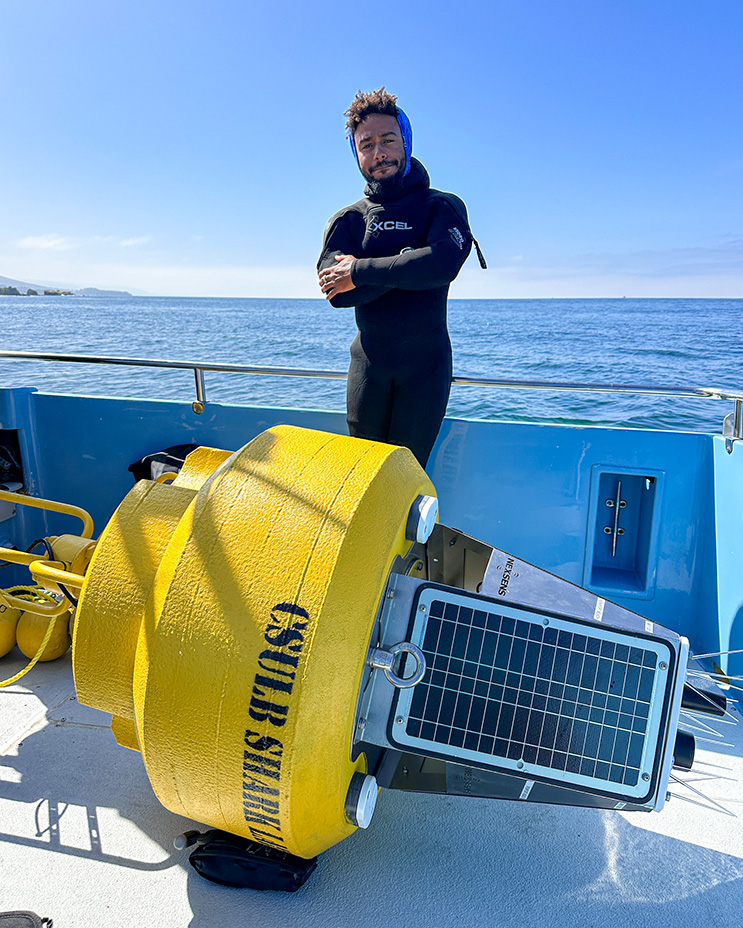
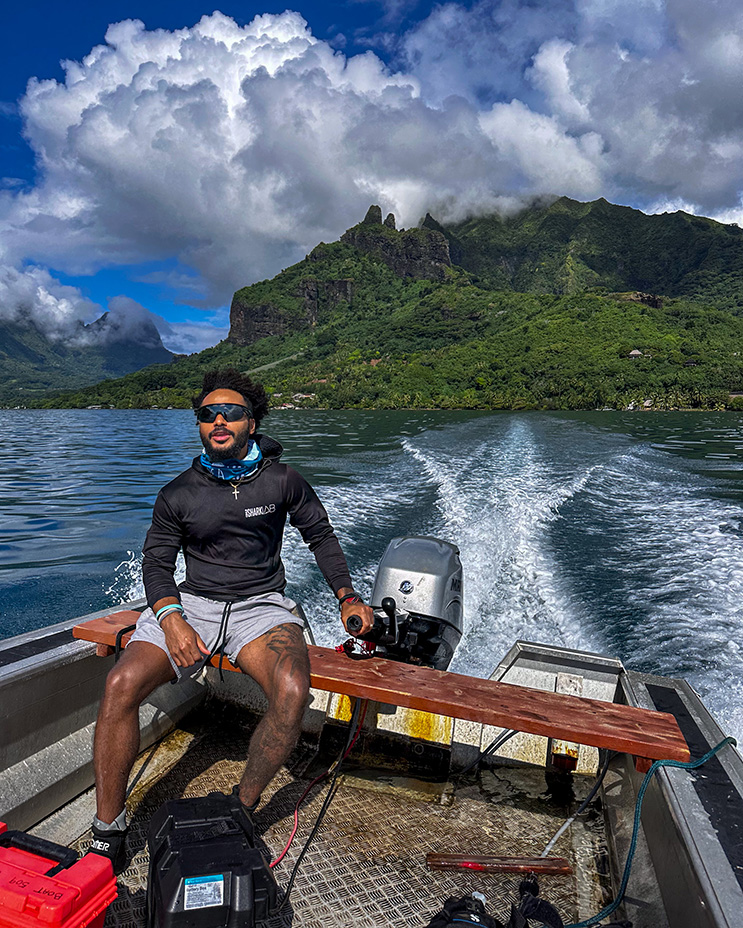
We deployed 14 acoustic receivers near Seacliff State Beach to listen for acoustically tagged sharks. This data will be compared to historical datasets to assess regional differences in JWS habitat use and potential range expansion.
What is the most significant finding to date?
Although field deployments are currently in the early stages, one of the most significant findings is the increasing frequency of JWS in Monterey Bay during unusually warm ocean conditions. Preliminary environmental observations indicate that some nearshore regions may remain warm enough to support prolonged JWS occupancy despite Monterey Bay generally experiencing cooler waters and regular coastal upwelling—potentially creating localized thermal stratification.
How is the surrounding community involved in the project?
JWS are increasingly observed near heavily used recreational beaches throughout California, making this project directly intersect with coastal communities. I’m involved in various outreach collaborations, such as community engagement initiatives with state park lifeguards to raise awareness of shark ecology and reduce misconceptions about shark-human interactions.
What’s one common misconception about JWS?
When I was a field tech at the Cal State Long Beach Shark Lab (CSULB), I worked with master’s student Emily Spurgeon to examine JWS movement behaviour at the surface using SMART tags. We observed sharks slowing down at the surface and moving in circular patterns, switching direction from clockwise to counterclockwise every 2-4 hours. We think this movement may allow sharks to take advantage of warm surface temperatures while engaging in unihemispheric sleep—a sleep pattern in which one part of the brain remains alert and active, similar to migratory birds. This means that when stand-up paddleboarders and kayakers assume they’re being circled and preyed upon, it’s possibly just a JWS getting some sleep. That’s one cool observation that we have.
What has surprised you about these sharks since working with them?
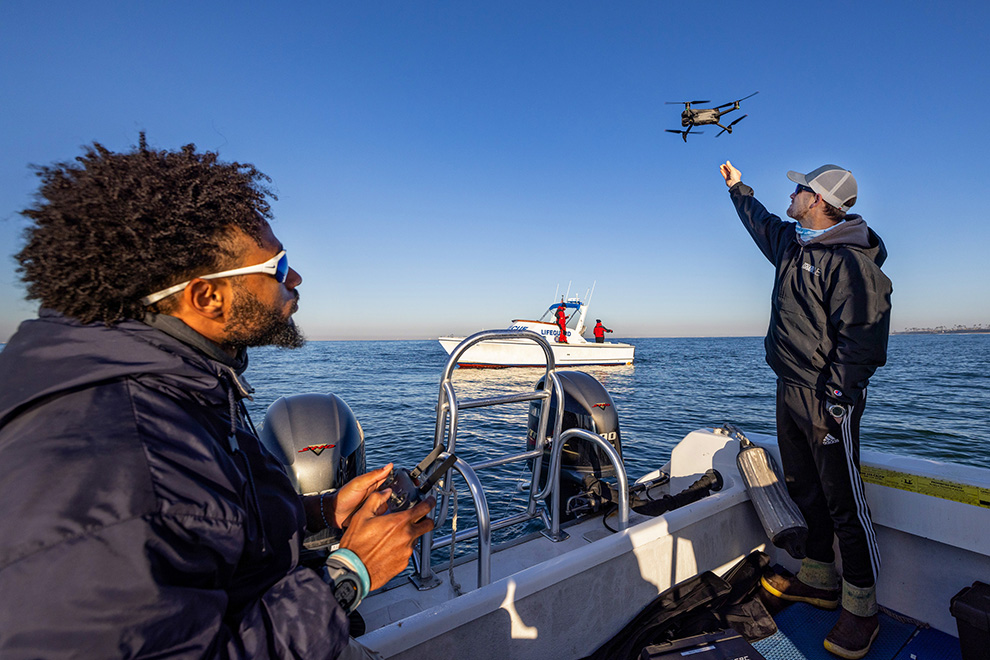
JWS are really skittish. Patrick Rex, a field tech at CSULB, used aerial drones to record all the sharks seen in close proximity to people. He found that even as human populations grew across multiple beaches, the bite rate never increased. Looking at the behaviours captured in Patrick’s footage, there would be sharks swimming right underneath surfers, right around stand-up paddleboarders, without even thinking about approaching them. If humans made sudden movements, the sharks would get scared and swim away. Films like Jaws and all these BBC documentaries tell you how ferocious white sharks are, but they never talk about the different life stages of sharks or behaviour shifts as sharks grow. Trying to change the perception of white sharks has been something that’s motivated me.
Describe the benefits of joining OTN.
Being involved in OTN has increased the likelihood of detecting tagged animals across broader coastal receiver networks, enabling my research to contribute to long-term monitoring efforts along the Pacific coast. In addition to equipment loans, OTN also provides valuable opportunities for mentorship, collaboration, technical training, and science communication, all of which are especially important for early-career researchers building interdisciplinary marine science projects.
General inquiries
+1 902 494 4101
otn@dal.ca
Data Centre
otndc@dal.ca
Media Contact
anja.samardzic@dal.ca
Go to…


© 2026 Ocean Tracking Network