
Mike Lawrence
RESEARCHER
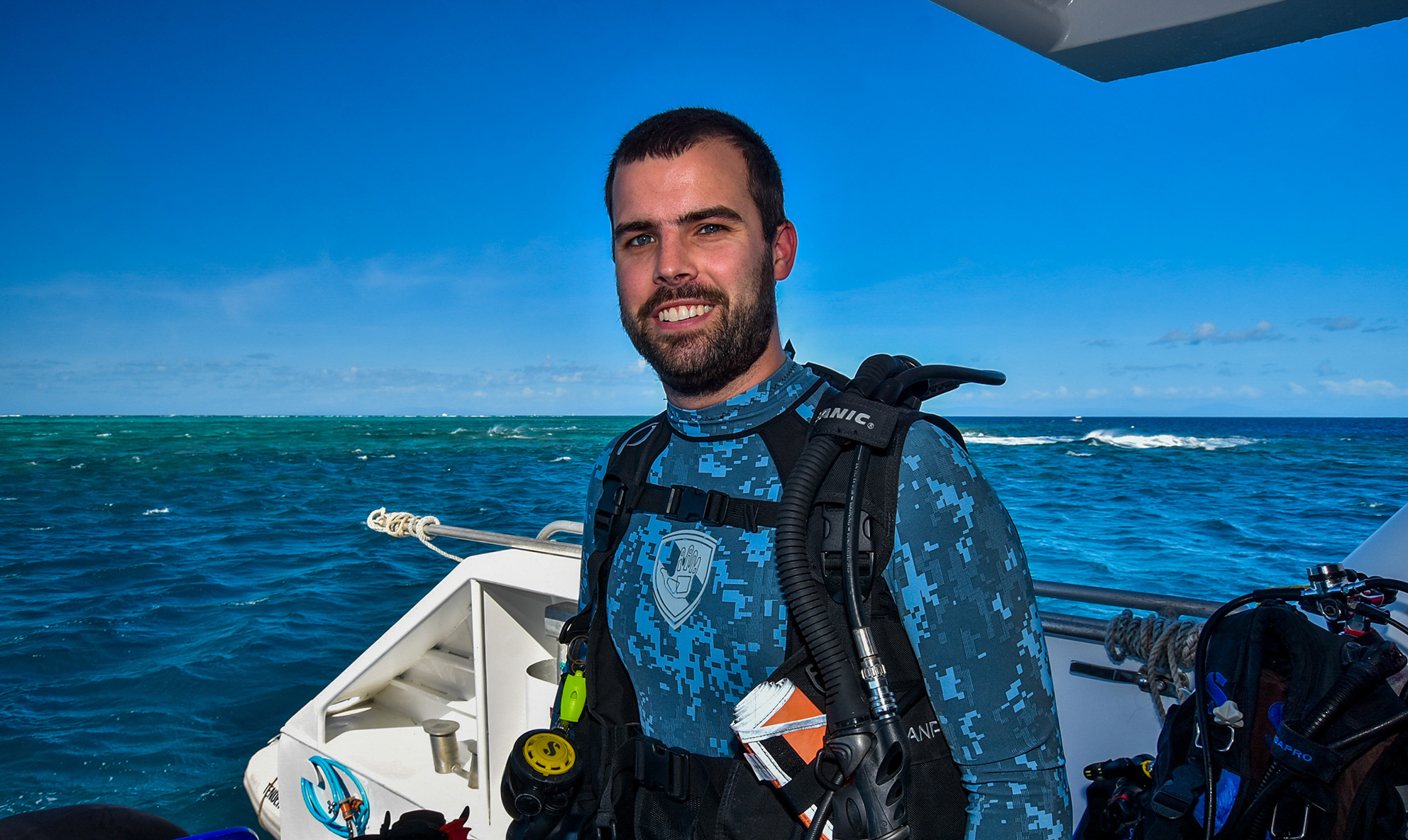
Mike Lawrence, Biologist
Country
Canada
Institution
St. Andrews Biological Station (Fisheries and Oceans Canada)
Ocean
Atlantic Ocean
Mike Lawrence is an aquatic fisheries biologist at the St. Andrews Biological Station in New Brunswick, Canada. In this interview, he explains how his research is helping us discover how key fish species use the Musquash Estuary Marine Protected Area (MPA).
Tell us about your research questions.
Our research aims to understand where different fish species are found in the Musquash Estuary MPA and how they behave, along with broader biodiversity patterns in the area. We’re generating data on key species to support proactive response plans in the event of marine pollution, and for evidence-based management of the MPA.
Why is this research important?
This research is improving response strategies for marine pollution events—particularly hydrocarbon spills—by identifying where fish are most likely to be found within the MPA. The resulting data help minimize ecological impacts, contribute to long-term records of fish and community biology, and inform evidence-based policies for managing the MPA. The species being studied are culturally and economically important to the region and have been documented in the MPA in prior research.
Describe your research methods.
In 2024, we set up 24 acoustic receivers in strategic locations throughout the Musquash Estuary MPA. Some were arranged like ‘gates’ to detect fish moving upriver, while others have been placed on intertidal flats to track tidal-associated behavioural patterns. We’ve also placed a cluster of acoustic receivers in the main bay to pinpoint finer-scale fish movements.
As part of these tracking efforts, we’ve tagged fish species in the MPA, including winter flounder and tomcod, and additional species outside the MPA—such as Atlantic salmon and Atlantic mackerel—using small acoustic tags surgically implanted inside the fish.
What is the most significant finding to date?
We’re currently analyzing the data that has been offloaded from the acoustic receivers. Once the analysis is complete, we’ll be ready to share our findings.
How is the surrounding community involved in the project?
This project is a highly collaborative endeavour involving several academic, governmental, NGO, and community partners, with the goal of maximising data collection for interested parties and improving our understanding of the MPA. All the data that our research group produces will be publicly available under the Government of Canada’s Open Science Initiative.
How does OTN support your project?
We’re actively collaborating with OTN on this project, as they maintain a few of the receivers in our telemetry array network. We’ve also received several receivers on loan from OTN as part of their equipment loaner program.
General inquiries
+1 902 494 4101
otn@dal.ca
Data Centre
otndc@dal.ca
Media Contact
anja.samardzic@dal.ca
Go to…
© 2026 Ocean Tracking Network